UAE Healthcare Regulation in 2026: What the Emirates Drug Establishment Means for Pharma, MedTech & Digital Health
Planning to launch in the UAE? Discover what the Emirates Drug Establishment means for healthcare regulation in 2026, including approvals, reliance pathways, pharmacovigilance, AI-enabled medical devices, and market access planning.
 Hema Dubey
Jul 9, 2026 09:24
3187
Hema Dubey
Jul 9, 2026 09:24
3187
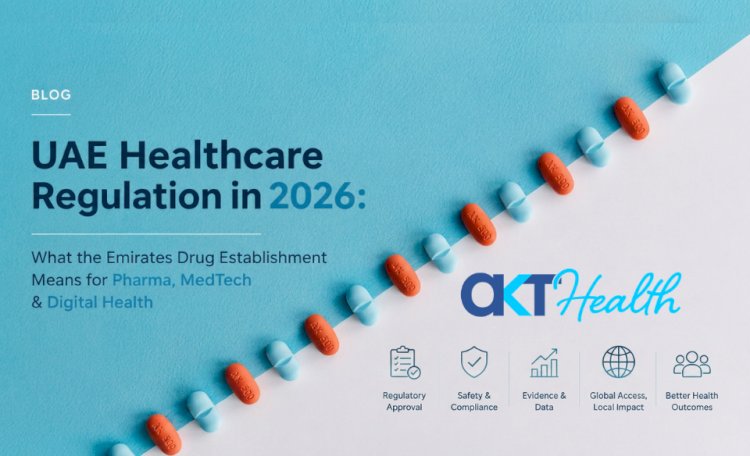
The UAE regulatory landscape has changed more in the last two years than in the previous decade. For pharmaceutical, medical device, and digital health companies, understanding the Emirates Drug Establishment (EDE) is now essential for successful market entry.
Established as the UAE's single federal authority for medicines and medical devices, the EDE has consolidated dozens of regulatory services previously split across MOHAP, DoH Abu Dhabi, and DHA Dubai into one national framework. For sponsors accustomed to navigating fragmented Gulf approvals, 2026 represents one of the most significant regulatory transformations the region has seen in years.
What does this mean in practice? From federal registration pathways and reliance models to pharmacovigilance obligations, AI-enabled medical devices, and evolving compliance expectations, the regulatory landscape is changing rapidly. Here's what has changed, why it matters for your market entry strategy, and how to prepare.
Key Highlights
- One federal regulator, not three. The EDE has absorbed 44 core services previously split across MOHAP, DoH Abu Dhabi, and DHA Dubai. A single UAE registration now covers the entire country.
- Published timeline vs. reality. The EDE's target review window is 45 working days, but realistic first-time registrations, including site licensing and LAR appointment, run 6–12 months.
- Reliance pathways are becoming standard. FDA/EMA-approved products can move faster through UAE review instead of a full independent dossier assessment.
- Pharmacovigilance is now a codified, lifecycle-long obligation under Federal Decree-Law No. 38 of 2024, not a post-launch afterthought.
- Enforcement is active and growing. The EDE reported 568+ warehouse inspections in a single year as part of its drug security program.
- AI-enabled digital health products face rising scrutiny as UAE-specific frameworks for SaMD and digital therapeutics mature.
1. One Federal Authority, Faster Pathways
The EDE was established in September 2023 as the UAE's sole federal regulator for medicines, medical devices, blood derivatives, medicated cosmetics, and related life-science products. By early 2026, it had absorbed 44 core regulatory services previously handled by MOHAP, consolidating oversight that had been split across multiple bodies into a single national authority.
What this means in practice:
- Federal, not emirate-level, registration. Once a product is registered with the EDE, it can be marketed anywhere in the UAE, Dubai, Abu Dhabi, and beyond. DHA and DoH no longer run separate device registries; their role is now limited to licensing healthcare facilities and professionals, and they may ask for proof of EDE registration during procurement or inspection.
- A published 45-working-day review target for many submissions, though sponsors should still plan realistically. First-time registrations, including local authorized representative (LAR) appointment, site licensing, and dossier review, commonly take 6–12 months end to end.
- Site licensing is now a prerequisite. Before a product application can even be filed, the manufacturing or import site must be registered with the EDE, a step that itself takes roughly 4–8 weeks.
The takeaway: centralization reduces duplication, but it also raises the bar on dossier readiness. A single federal review means fewer chances to course-correct mid-process.


2. Reliance Pathways Are Becoming the Default, Not the Exception
The EDE has continued building out reliance and recognition routes, allowing UAE registration decisions to draw on prior approvals from stringent reference authorities such as the FDA and EMA. For sponsors with an existing US or EU approval, this can meaningfully compress UAE review timelines compared with a full standalone dossier review.
This is especially relevant for:
- Companies entering the GCC for the first time off the back of a Western approval
- Rare disease and orphan therapies seeking expedited or conditional authorization
- Devices and IVDs where performance data aligned to EU IVDR or FDA frameworks can be leveraged directly
The strategic question for sponsors isn't whether to use a reliance pathway, but which combination of federal (EDE) and, where relevant, GCC-wide centralized routes gets your specific product to market fastest, a decision that depends heavily on product class, risk category, and prior approval history.
3. Pharmacovigilance and Lifecycle Obligations Are Tightening
Market entry is no longer the finish line. Under the UAE's new legal framework (Federal Decree-Law No. 38 of 2024), marketing authorization holders face codified, lifecycle-long obligations:
- A designated pharmaceutical establishment must be nominated as the entity responsible for regulatory affairs, pharmacovigilance, and quality management across a product's entire UAE lifecycle.
- Pharmacovigilance is being centralized under the EDE, with dedicated pharmacovigilance officer requirements now expected at the establishment level.
- Import and supply-chain traceability are under active enforcement. The EDE has reported conducting hundreds of warehouse inspections in a single year as part of its drug security program, with findings feeding directly into its digital compliance systems.
For MAHs, this means PV infrastructure QPPV appointment, PSMF maintenance, ICSR, and PSUR/PBRER submission are now a continuous compliance obligation, not a post-launch afterthought.
4. AI and Digital Health Are Getting Their Own Regulatory Lane
The EDE has publicly discussed its own shift toward agentic AI to make pharmaceutical regulation more proactive, alongside broader UAE healthcare innovation initiatives spanning telehealth, cloud-based records, and digital therapeutics. For sponsors building AI-enabled software as a medical device (SaMD) or digital therapeutics, this translates into rising expectations around:
- Clinical validation evidence for adaptive/AI-driven algorithms
- Data privacy and interoperability standards for cloud and telehealth platforms
- Alignment with international frameworks as UAE-specific digital health guidance matures
Digital health sponsors should expect scrutiny to increase, not ease, as the regulatory framework catches up with the pace of product innovation.
5. What This Means for Your Market Access Strategy
Put together, these shifts point to one conclusion: the UAE is rewarding sponsors who show up with a regulatory-first strategy, not a reactive one. That means:
- Mapping the optimal registration route (federal EDE vs. reliance vs. GCC-wide centralized procedure) before you finalize your dossier
- Securing a local authorized representative and site licensing early, since these are prerequisites, not parallel tracks
- Building pharmacovigilance infrastructure into your launch plan from day one, not after your first safety signal
- Treating AI/digital health components as a distinct regulatory workstream with their own evidence requirements

Plan Your UAE & GCC Regulatory Strategy with AKT Health
Regulatory success is no longer defined by approval alone. It depends on building a strategy that connects regulatory planning with clinical development, evidence generation, market access, and post-market compliance.
AKT Health helps life sciences organizations navigate complex regulatory pathways across the UAE and GCC through integrated expertise spanning Clinical, Medical, Commercial, Outcomes, and Regulatory Affairs, supported by RegXtrakt, our AI-powered regulatory intelligence platform.
Whether you're preparing your first market entry or expanding across the region, our team can help you build a regulatory strategy aligned with your long-term commercial objectives.
info@akthealth.com | www.akthealth.com | Masdar City, Abu Dhabi
FAQ: UAE Healthcare Regulation in 2026
1. What is the Emirates Drug Establishment (EDE)? The EDE is the UAE's federal regulatory authority for pharmaceuticals, medical devices, blood derivatives, medicated cosmetics, and related products. It was established in September 2023 and has progressively taken over registration, licensing, and pharmacovigilance functions previously split across MOHAP, DoH Abu Dhabi, and DHA Dubai.
2. How long does it take to register a pharmaceutical or medical device in the UAE? The EDE publishes a target review window (around 45 working days for many submissions), but realistic end-to-end timelines for first-time registrations, including site licensing and LAR appointment, typically run 6–12 months.
3. Can I still register separately with DHA or DoH Abu Dhabi? No. Medical device and drug registration is now a federal EDE process. DHA and DoH Abu Dhabi regulate healthcare facilities and professionals within their emirates, not product registration itself, though they may request proof of EDE registration during procurement or inspection.
4. Can FDA or EMA approval accelerate UAE product registration? It can. Reliance pathways allow the EDE to consider approvals from recognized stringent regulatory authorities, which can shorten review timelines compared with a full independent dossier assessment, though the exact benefit depends on product class and evidence quality.
5. Do I need a UAE-based Local Authorized Representative (LAR)? Yes. Foreign manufacturers must appoint a UAE-licensed pharmaceutical establishment to act as LAR/Marketing Authorization Holder, submit applications, and manage post-market obligations on their behalf.
6. How can AKT Health support regulatory market entry in the UAE and GCC?AKT Health provides integrated support for pharmaceutical, biotechnology, medical device, and digital health companies throughout the product lifecycle. Our expertise spans Regulatory Affairs, Clinical Development, Medical Affairs, HEOR & Market Access, Pharmacovigilance, and Real-World Evidence, helping organizations navigate UAE and GCC regulatory requirements while aligning regulatory strategy with broader commercial and evidence-generation objectives.