Shonan Daiichi Hospital and AKT Health Conduct Joint PoC Evaluation of Sensor-Based Fall Detection Technology for Elderly Care
AKT Health and Shonan Daiichi Hospital evaluate sensor-based fall detection technology in a real clinical environment in Japan, generating insights for future development and implementation. A Proof-of-Concept in a Real Clinical Environment Evaluates the Feasibility of Implementing Elder Safety Technology in Japanese Healthcare Settings.
 Hema Dubey
Aug 21, 2026 09:44
743
Hema Dubey
Aug 21, 2026 09:44
743
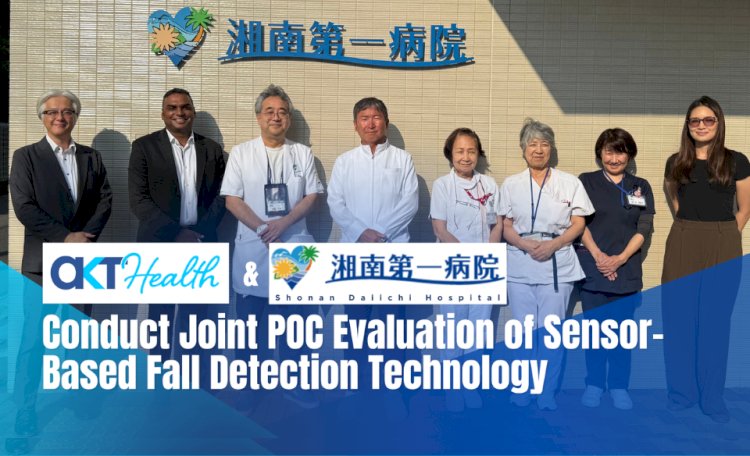
AKT Health Co. Ltd. today announced that it has conducted, jointly with Medical Corporation Shonan Mirai Shonan Daiichi Hospital (Fujisawa City, Kanagawa Prefecture), a proof-of-concept evaluation in a real clinical environment of a fall detection system developed by an overseas digital health startup developing next-generation sensor-based fall detection technology for older adults.
The purpose of this proof-of-concept evaluation was to examine the technology’s usefulness and operational challenges in Japan’s real clinical environment, and to evaluate the implementation feasibility of a new medical technology that may contribute to improving the safety of older adults.
The evaluation was conducted in the inpatient ward of Shonan Daiichi Hospital and involved 22 healthcare professionals, including nursing staff, healthcare practitioners, and hospital management. Participants evaluated the system’s usability, compatibility with clinical workflows, and operational considerations, generating practical insights regarding its implementation feasibility in Japanese healthcare settings.
Through this project, AKT Health and Shonan Daiichi Hospital aimed to evaluate how the fall detection technology under development could be used in an actual hospital operating environment in Japan, and to identify its potential usefulness, operational challenges, and areas for further improvement. Candid feedback from healthcare professionals engaged in daily patient care will serve as important insight for future technology development and consideration of deployment in the Japanese market.

“Improving patient safety is one of the most important missions of any medical institution. Through this joint demonstration evaluation, we had the opportunity to assess a fall-detection technology currently under development in an actual hospital ward setting. We hope that the insights gained through this project will not only enhance the safety of our patients but also contribute to the further advancement of medical technology. Going forward, Shonan Daiichi Hospital will continue to actively explore new medical technologies that can improve patient safety, evaluating them on the basis of scientific evidence.” Koichi Shimamura, Director at Shonan Daiichi Hospital
“We were honored to be chosen as the site for this technology demonstration, which gave us our first experience taking part in the development process of a medical device. We came to appreciate firsthand the difficulty of development, in which outcomes are shaped not only by the device's performance but also by the interplay of patient behavior, medical staff workflow, and the clinical environment. We would like to express our respect for the developers and AKT Health, who are taking on the challenge of global innovation. We hope that the insights gained at a single hospital in Japan will contribute to the further advancement of this technology and its appropriate adoption in clinical practice.” Michitaka Nagashima, Deputy Director at Shonan Daiichi Hospital
Background
Preventing falls among inpatients is an important patient safety priority for healthcare institutions in Japan. As the proportion of older patients continues to increase, preventing and responding quickly to falls is becoming increasingly important not only for ensuring patient safety, but also for reducing the workload of healthcare professionals.
At the same time, introducing new medical technologies into clinical practice requires more than confirming technical performance. It is important to evaluate, in a practical manner, whether the technology can be operated smoothly in actual clinical settings, whether it fits existing workflows, and what value it can bring to patient care.
This proof-of-concept evaluation was conducted from this perspective, with the aim of assessing the implementation feasibility of fall detection technology in Japan’s real clinical environment.
AKT Health coordinated the full scope of the evaluation; from PoC framework design and hospital partnership development through to clinical evaluation, regulatory compliance, and commercial assessment enabling the overseas company to conduct a meaningful, structured evaluation within Shonan Daiichi Hospital's real inpatient environment.
“As an acute-care hospital specializing in elderly patients, preventing falls and ensuring patient safety is one of our most important nursing objectives. If advanced technologies such as AI can be introduced into clinical practice to provide instant information on fall risk and enable it to be used appropriately, this could greatly improve both the care environment for patients and the workflow for staff. We look forward to seeing the results of this work going forward.” Hideko Kudo, Director of Nursing at Shonan Daiichi Hospital
AKT Health's Role
AKT Health supported the overall proof-of-concept evaluation as a bridge between the overseas company and the Japanese medical institution.
- Hospital Partnership Development: Building and managing the institutional relationship with Shonan Daiichi Hospital. AKT Health led stakeholder engagement with hospital leadership and clinical teams, facilitating all approvals and operational agreements necessary to evaluate within the hospital's active inpatient environment.
- PoC Framework Design: Design of a structured evaluation framework specific to the Japanese clinical environment, including KPIs, evaluation criteria, and implementation conditions, to ensure the pilot generated meaningful, actionable evidence.
- Pilot Coordination and Deployment: End-to-end project coordination across environment assessment, technology deployment, and ongoing liaison between the overseas developer and the hospital's clinical teams throughout the evaluation.
- Regulatory and Data Governance: Interpretation and operationalisation of Japan's regulatory requirements and data governance obligations into practical, executable on-site procedures ensuring full compliance throughout the pilot.
- Healthcare Professional Survey and Feedback Analysis: Design and administration of a structured evaluation instrument across 22 healthcare professionals; systematic analysis of findings on usability, workflow integration, and the practical experience of the hospital's clinical team.
- Commercial Strategy Assessment: Assessment of pathways and considerations for the technology's future development within Japan's healthcare market, providing the overseas company with a clear, Japan-grounded foundation for next-phase planning.
Outcomes of the Proof-of-Concept Evaluation
The following outcomes were achieved:
- 22 healthcare professionals participated, nursing, clinical, and management roles; providing structured real-world feedback on technology performance and daily clinical experience
- Real-world inpatient validation completed at Shonan Daiichi Hospital, generating Japan-specific clinical evidence grounded in actual ward practice
- Operational considerations documented, practical, honest assessment from frontline professionals of what would need to be in place for technology like this to work well in a Japanese hospital setting
- Commercial development pathways assessed within Japan's healthcare environment, clear foundation established for the overseas company's next decisions
- PoC contracted from initial assessment; the result of careful relationship-building and structured preparation
"Healthcare innovation depends not only on technology, but also on rigorous evaluation within real clinical environments. Through our collaboration with Shonan Daiichi Hospital, this pilot generated valuable operational insights while strengthening the foundation for evidence-based assessment of emerging patient safety technologies. AKT Health will continue to support Japanese medical institutions and overseas medical technology companies as a partner that connects them, providing end-to-end support from proof-of-concept evaluation through market implementation." Aditya Tallapragada, President, AKT Health Co. Ltd
 Future Outlook
AKT Health and Shonan Daiichi Hospital will continue to review the insights and healthcare professional feedback obtained through this proof-of-concept evaluation, and will consider future technology improvements and additional validation activities.
AKT Health will continue to serve as a bridge between overseas medical and healthcare technologies and Japanese clinical settings. Through proof-of-concept evaluations, medical institution partnerships, regulatory support, and market entry support, AKT Health will contribute to the social implementation of innovations that benefit healthcare in Japan
About Shonan Daiichi Hospital
Our hospital is a distinctive acute-care hospital unlike any other in the Shonan/Fujisawa area, focusing on inpatient and home-visit care for elderly patients, particularly those requiring long-term care at nursing facilities while also drawing on our local presence to provide outpatient care for common diseases among residents. To protect the lives of elderly patients requiring care and the health of the generations who support them, we also take an active role in public health initiatives such as health checkups, adult vaccinations, and medical consultations. Although we are a small hospital with fewer than 100 beds, our staff work together with energy and unity, guided by a shared commitment to "not viewing the elderly as a risk," as we envision the future of both our hospital & our community.
About AKT Health Co. Ltd.
AKT Health Co. Ltd. is a healthcare and life sciences consulting firm established in 2019, supporting pharmaceutical, biotechnology, medical device, and healthcare organizations across clinical, medical, outcomes, and commercial strategy.
Combining strategic consulting with hands-on execution, AKT Health brings expertise across clinical and real-world evidence, medical affairs, HEOR, market access, and commercialization, supported by AI, advanced analytics, real-world data (RWD), and digital health technologies.
With a strong presence in Japan, AKT Health helps global healthcare organizations navigate market complexities, collaborate with medical institutions and key stakeholders, and advance innovations from evidence generation and market entry through real-world implementation and commercialization.